Emergency Tree Removal in Deer Park, WA
Wind and heavy snow bring trees down fast here. Deer Park Tree Removal does not clear storm damage. Send a request and an independent contractor may assess it.
Deer Park Tree Removal is a free referral service and does not perform the work. Emergency tree removal in Deer Park calls for a different pace than routine work, but not a different level of care. A tree on a roof or blocking a driveway is urgent; it's still a job that needs to be assessed correctly before anyone starts cutting, storm or no storm.
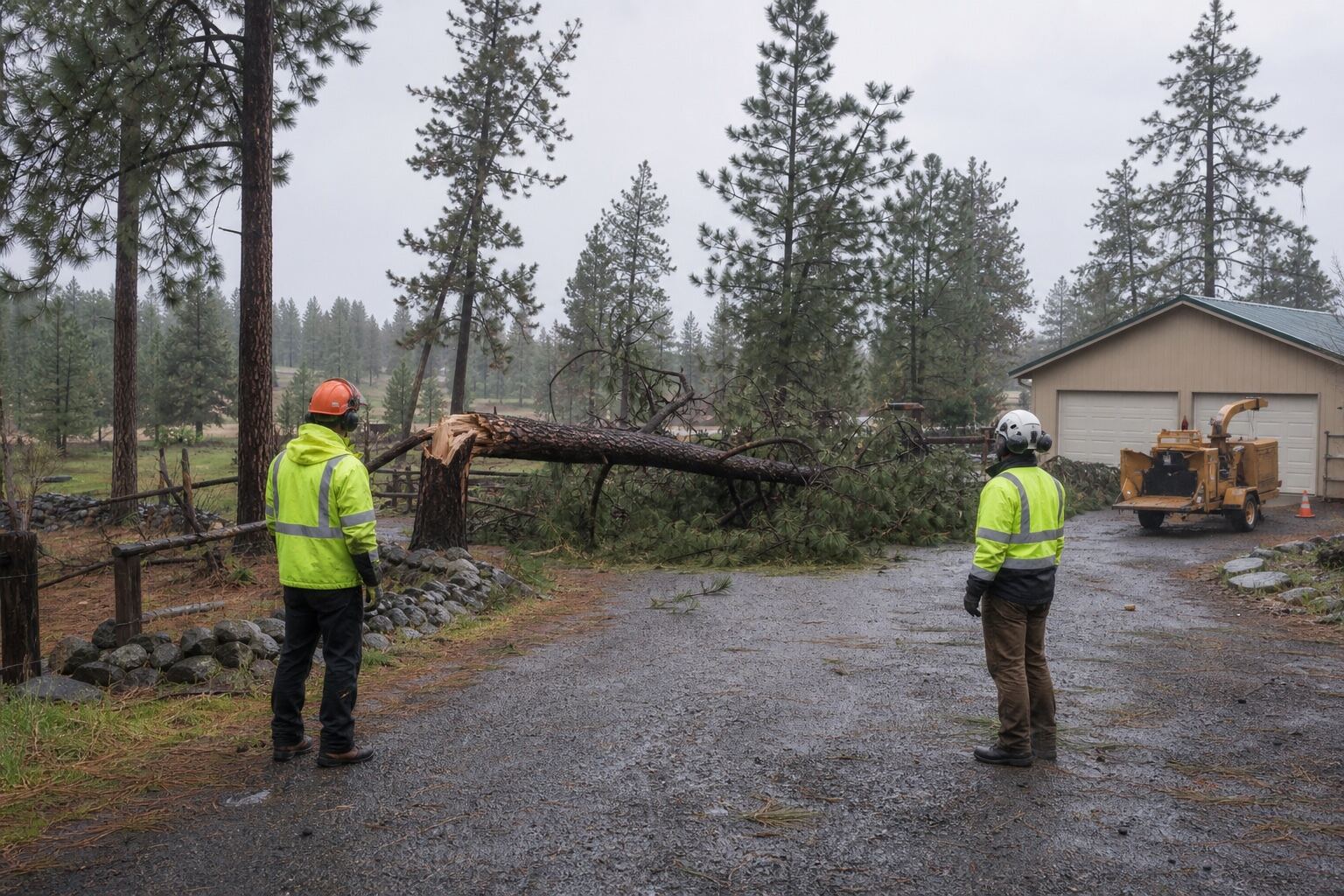
Storm Response, Not a Minute Guarantee
Deer Park Tree Removal does not take storm calls and does not route crews. It does not promise an arrival window. Road conditions, downed lines, and how many jobs are already out determine what an independent contractor can do. Say what is down in the request. A provider may contact you. They set their own timing.
Hazard Assessment: What a Crew Looks For
Before anyone touches a saw, a crew looks at what's actually holding the tree or limb up, what it would hit if it moved, and whether the ground underneath is stable enough to work on safely. Cracked trunks, root plates that have partially lifted, and limbs under tension from a partial break all change how a piece has to come down. Rushing this step is how storm cleanup turns into a second emergency.
A crew also checks the rest of the property while on site, since storm damage rarely stops at the one tree someone requested. A neighboring tree with a fresh lean, a cracked limb two trees over, or debris blocking a second exit route are the kind of things worth flagging even if they weren't part of the original call.
Hung and Cracked Limbs
A limb that's broken but caught in the canopy above, what crews call a hangar, is often more dangerous than one already on the ground, because it can let go without warning and there's no way to predict exactly when. Treat any hung limb as a keep-out zone until it's been assessed. Cracked but still-attached limbs are similar: they look intact from the ground but can be holding on by very little.
Tree-on-Structure Protocol
If a tree comes down on a house, garage, or vehicle, get everyone clear of the area first. Don't go up on a roof or try to shift the tree yourself, weight distribution on a damaged structure is unpredictable. Photograph the damage from a safe distance if you can do it without getting close, then call your insurance company and a tree crew. A crew should assess how the tree is loading the structure before removing anything, since cutting the wrong piece first can shift weight in a bad direction. This site does not send that crew.
Insurance Documentation
Ask the contractor who does the work whether they will photograph the damage and provide an itemized invoice. That is the kind of paperwork most adjusters ask for alongside your own photos. This site does not do the work and cannot guarantee what an insurer will approve.
When Deer Park Gets Hit Hard
Most years bring a handful of wind and heavy-snow events that take down scattered limbs and the occasional weak tree. Every so often the county gets hit by something bigger. The November 2015 windstorm is still the benchmark a lot of longtime residents measure other storms against, widespread power outages, trees down across whole neighborhoods, and cleanup that took weeks in places. It's a useful reminder that "it probably won't happen here" isn't a great plan for a property with mature trees near the house.
Frequently Asked Questions
Does this site offer 24/7 emergency tree removal?
+
No. This site does not take storm calls, does not dispatch a crew, and does not offer 24/7 response or a guaranteed arrival time. Send a request describing the hazard. Independent contractors set their own hours and decide what they can take.
A limb is hung up in my tree but hasn't fallen. Is that urgent?
+
Yes, treat a hung limb as a real hazard even though it hasn't come down yet. A broken limb caught in the canopy above can fall with no warning, especially with added wind or the weight of new snow, and it's often more dangerous to work around than a limb that's already on the ground. Keep people and vehicles clear of the drop zone until a crew assesses it.
A tree fell on my house. What should I do first?
+
Get everyone out of the affected area and call your insurance company and a tree crew, in whichever order makes sense for your situation. Don't go up on the roof or try to move the tree yourself. Take photos of the damage from a safe distance before anything gets moved, since that documentation matters for your claim.
Will you help document the damage for my insurance claim?
+
This site does not photograph damage or write invoices. Ask the contractor who does the work whether they will document what came down and what they removed. Insurers decide what they approve. This site cannot guarantee a claim.
Do you handle cleanup after a whole property gets hit by a windstorm?
+
Multi-tree storm cleanup is common after a wind event moves through the county and takes down several trees or large limbs across one property at once. A contractor assesses the whole site, prioritizes anything hazardous or blocking access, and works through the rest in order rather than picking randomly. This site does not dispatch that crew. See our tree removal page for how individual removals are priced.
Storm Damage? Request Quotes
Describe what's down and where in the request. A local provider may contact you. This site does not dispatch a crew or guarantee an arrival time.