Tree Trimming & Pruning in Deer Park, WA
Crown work that keeps a tree healthy and the right shape, not a hack job that grows back worse than it started.
Deer Park Tree Removal is a free referral service and does not perform the work. Tree trimming in Deer Park, WA covers a lot of ground: clearing a roofline, opening a view, thinning a crown that's grown too dense, or pruning for storm resistance before winter. Good pruning is deliberate. Every cut has a reason, and a crew that can't tell you the reason for a cut probably shouldn't be making it.
Crown Thinning, Raising, and Reduction
Most trimming jobs are some combination of three techniques. Thinning removes select interior branches to let light and air move through the canopy without changing the tree's overall silhouette, useful for a dense maple or fruit tree that's started shading itself out. Raising removes lower limbs to clear a roofline, a driveway, or a path you keep ducking under. Reduction shortens the crown's overall size by cutting back to lateral branches large enough to take over growth, the correct way to make a tree smaller when it's outgrown its spot near a house or fence.
View Pruning
A fair number of properties around Deer Park sit up on a rise or look out over a draw, and the trees that made the lot beautiful in the first place can eventually grow into the view they used to frame. View pruning opens a sightline by selectively removing or raising specific limbs instead of topping the whole tree flat, which keeps it healthy and looking like a tree instead of a stump with leaves on top. It takes more judgment than routine thinning, since every cut changes what you'll actually see from the deck.
Health Pruning and Dormant-Season Timing
For most deciduous trees, late fall through winter, once leaves have dropped and the tree is dormant, is the best window for structural pruning. The tree isn't actively pushing energy into leaf growth, wounds close over before spring sap flow, and it's easier to see branch structure without foliage in the way. Pines and other conifers are more flexible and can be pruned across a wider window, though heavy cuts during active new growth in spring are still worth avoiding. Dead or hazardous limbs get removed whenever a crew finds them. Season doesn't change that.
Storm-Prep Pruning
Before wind and heavy snow season, thinning a dense crown reduces the sail area wind pushes against and removes the weak, narrow-angle branches most likely to snap under a wet snow load. It's a lot cheaper to prune a tree in October than to clean one up off your roof in December. If you've had storm damage before or you're worried about a specific tree, put that in a request ahead of the season rather than waiting until the tree is already down. This site does not inspect the tree.
Why Topping Is a Bad Idea
Topping, cutting main limbs or the leader back to stubs, is still something people ask for when a tree feels too big, and it's still a bad idea. The stubs left behind can't seal properly, which invites decay into the trunk. The tree responds with a flush of weakly attached water sprouts that grow fast and break easily, often making the tree more hazardous within a few years than it was before the cut. If a tree genuinely needs to come down in size, crown reduction does that correctly, cutting back to laterals that can support new growth. If a tree is too big for where it is regardless of pruning, removal is usually the more honest answer, and a contractor should say so. This site does not make that call.
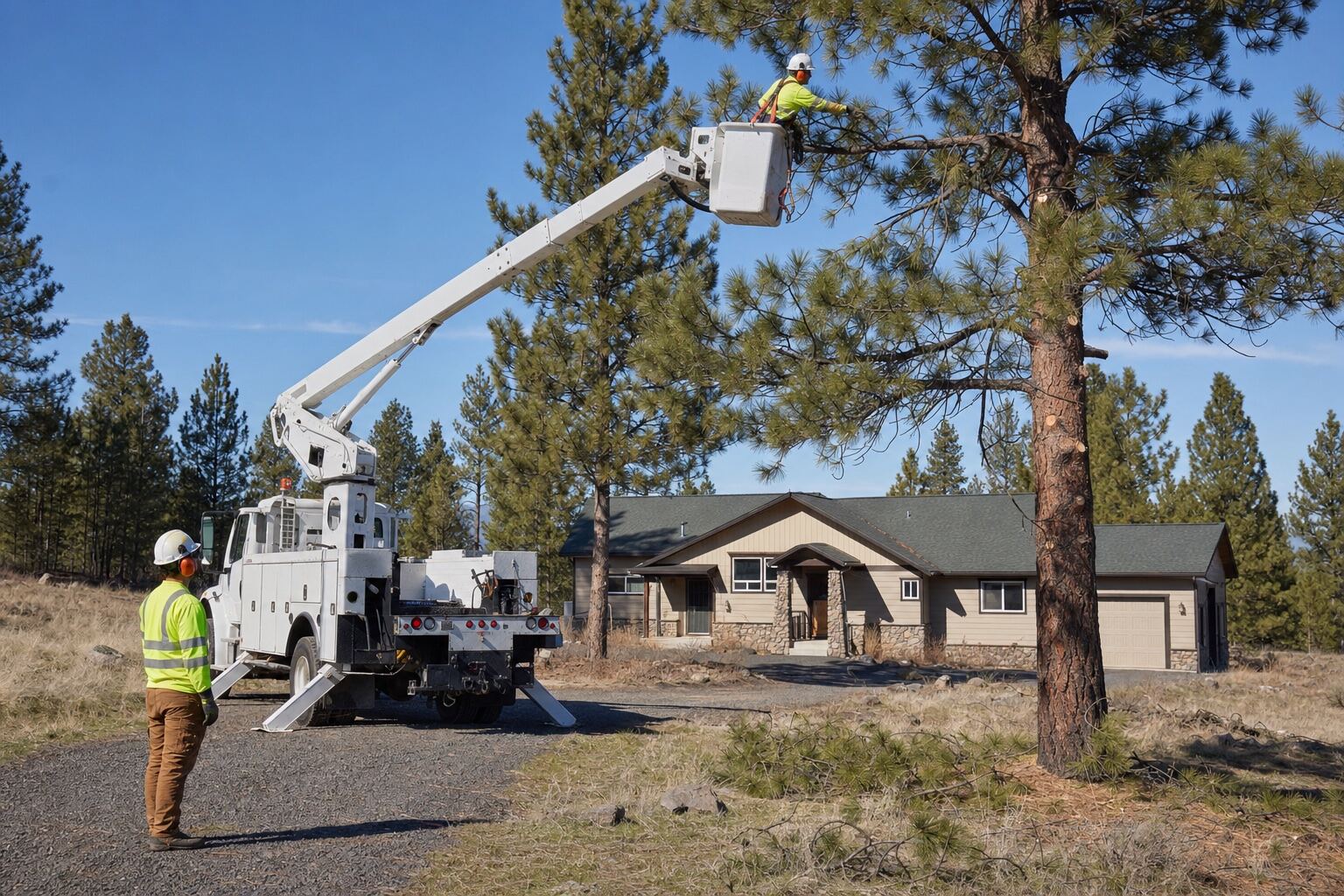
Every trimming job starts with a walk around the tree, not a ladder and a set of loppers straight off the truck. A crew looks at branch attachment, the direction of existing lean, and what's underneath before deciding which limbs come off. Most jobs are handled with a pole saw or climbing gear; a bucket truck comes out for taller work where climbing would take longer or add unnecessary risk. Whatever the tool, the same rule applies: know why a cut is happening before making it.
Frequently Asked Questions
How often should trees be trimmed?
+
Most healthy shade and ornamental trees do well with a check-up and light pruning every two to four years, while young trees benefit from more frequent, lighter shaping to establish good structure early. Trees with a history of storm damage or growing near a roofline are worth checking yearly. There's no single right interval; it depends on the species and what's around the tree.
What's the difference between crown thinning, raising, and reduction?
+
Thinning removes select interior branches to let light and air through without changing the tree's overall shape. Raising removes lower limbs to clear a roofline, driveway, or walking path. Reduction shortens the crown's overall size by cutting back to lateral branches, used when a tree has outgrown its space. A crew often combines two of the three on the same visit.
Will trimming hurt my tree?
+
Done correctly, pruning is routine maintenance a tree recovers from without issue; done badly, especially topping, it can trigger decay and weak regrowth that makes the tree less safe over time. A proper cut is at the branch collar, not mid-limb, and it never removes more of the live crown than the tree can recover from in one visit.
Can you prune trees for a better view?
+
Yes. View pruning selectively removes or raises specific limbs to open a sightline toward a hill, a valley, or open ground, while keeping the tree's natural shape and health intact. It takes more judgment than a straight thinning job because every cut affects what you'll actually see from the porch or the deck.
Do you trim trees near power lines?
+
A contractor assesses clearance before quoting the job, and if a limb is close enough to a line that it needs utility involvement, they should say so and coordinate that separately rather than working near an energized line. This site does not trim the tree or set the price. Most yard-tree trimming away from the service drop doesn't involve this at all. For removals near lines, see our tree removal page.
Get a Free Trimming Estimate
Describe what the tree needs in the request. A local provider may contact you. This site does not schedule visits or set the price.