Tree Removal in Deer Park, WA
Hazard trees, storm damage, and removals near structures or power lines, done by a crew that rigs it down instead of dropping it and hoping.
Deer Park Tree Removal is a free referral service and does not perform the work. Tree removal in Deer Park, WA isn't always the right call. A dead, structurally cracked tree, or one growing too close to a building or power line to manage with pruning, is usually a removal rather than a prune. Doing it right takes more than a chainsaw and nerve. An independent contractor makes that call.
When to Remove a Tree, and When to Save It
A dying limb or two doesn't mean the whole tree has to go. A useful assessment looks at the trunk, the root flare, and the crown before anyone recommends removal, and plenty of trees that look rough are actually fine with some pruning or, in specific cases, cabling to support a weak union. What pushes a tree from "save it" to "take it down" is usually one of a few things: a cracked or hollow trunk, fungal conks growing at the base (a sign of root or butt rot), a crown that's more dead than alive, or a sudden lean that wasn't there last season. A lean that's been stable for years is a different story than one that showed up after a windstorm.
Location matters too. A leaning tree in the middle of five acres is a wait-and-watch situation. The same lean sixty feet from a bedroom window is not.
How a Tree Comes Down
-
Assessment
Assessment means walking the property, checking the tree's lean, structural defects, and drop zone, and looking at what's nearby: the house, the septic field, the driveway, any power lines. That is also where a contractor figures out whether the tree can be felled whole or needs to come down in rigged sections.
-
Rigging
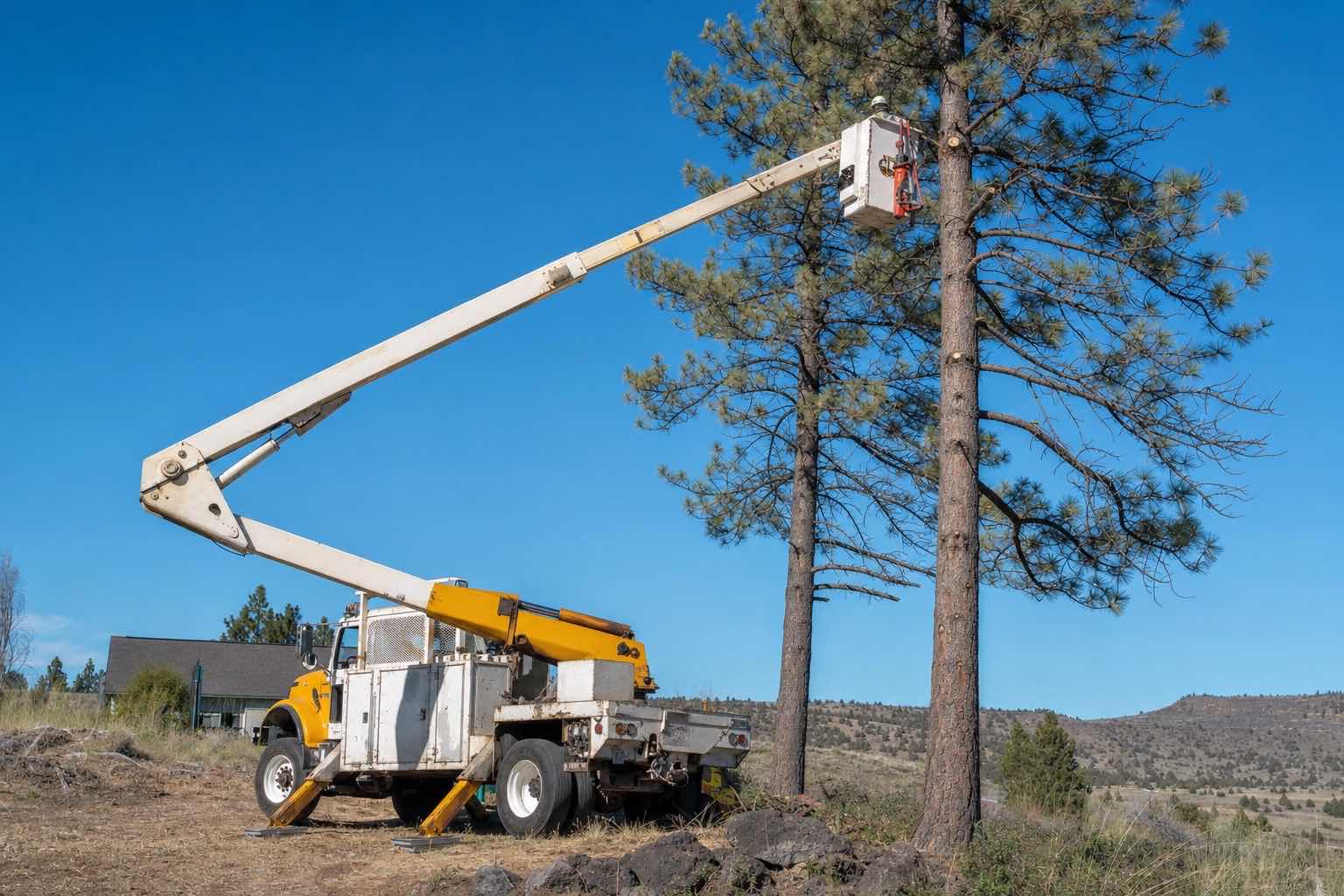
When there isn't a clear lane to drop the tree whole, the crew sets rigging lines and control points so sections can be lowered instead of dropped, keeping the impact away from anything that matters.
-
Section Felling
The crew works down from the top, cutting and lowering manageable sections until the trunk is at a height and lean that can be dropped or cut flush to the stump.
-
Cleanup
Branches go through the chipper, rounds get stacked or hauled per your preference, and the crew rakes the work area before leaving. Stump grinding is a common add-on if you want the stump gone too. This site does not perform either step.
What Drives the Cost of Tree Removal
Five things move the price on a removal job: the tree's height, trunk diameter, how close equipment can get, what structures are nearby, and whether power lines are in play. Ranges below are typical starting points, not quotes; the only way to get a real number is a site visit, because a "medium" tree with a clean drop zone can cost less than a "small" tree wedged between a fence and a propane tank.
| Size Class | What That Looks Like | Typical Range* |
|---|---|---|
| Small | Under 30 ft, open drop zone, no structures nearby | $300 – $800 |
| Medium | 30–60 ft, moderate access, some rigging near a fence or shed | $800 – $2,500 |
| Large / Complex | 60+ ft, tight access, near a house, roof, or power line | $2,500 – $6,000+ |
Height and trunk diameter set the baseline: taller, thicker trees take longer to rig and cut. Access is the next biggest factor, a tree a truck can pull right up to costs less than one that has to be reached with hand-carried gear across a soft yard or down a long gravel drive. Nearby structures mean more rigging and slower, more careful cuts. Power lines add coordination time and sometimes a call to the utility company before work can start.
Emergency Removals
When a tree comes down on a structure, blocks a driveway, or is visibly about to fail, independent contractors decide whether they can treat it as a priority. This site does not route a crew and does not promise an arrival window, because conditions during a storm are unpredictable. For active storm response and hazard assessment, see our storm damage page.
What Happens to the Wood
Full haul-away is standard and included in most quotes. If you'd rather keep rounds for firewood or have chips left on-site for mulch or path material, say so in the request before the job starts. The crew needs to know in advance so they bring the right trailer setup and don't chip something you wanted kept.
Frequently Asked Questions
How long does a tree removal take?
+
Most single-tree removals take two to four hours once the crew is on site, though a large tree near a structure or with a lot of rigging can run a full day. Stump grinding, if you add it, is usually another hour or two. A contractor can give a realistic time estimate when they quote the job, based on what they see at the property. This site does not quote it.
Do you remove trees near power lines?
+
Yes, carefully. If a tree is growing into or leaning toward a line, a contractor assesses clearance before touching a saw to it, and if the job requires the line de-energized or a utility crew involved, they coordinate that ahead of time rather than working around a live line. Safety around power comes before speed on every job.
Should I remove a tree or just have it trimmed?
+
If the tree is structurally sound and the problem is a dead limb, overgrown crown, or clearance issue, trimming usually solves it and costs less than removal. Removal makes sense when the trunk is cracked, the root system is compromised, or the tree is dead and dropping limbs. A contractor should say honestly which one the tree needs. This site does not make that call. See our tree trimming page for what pruning alone can fix.
Do you leave the wood or haul it away?
+
Either. Full haul-away is standard and included in most quotes, but if you want rounds left for firewood or a pile of chips for mulch or paths, say so in the request before the job starts and the crew can leave what you want and haul the rest. It's easier to plan for upfront than to change mid-job.
Can you remove a tree in winter, or does it have to wait for a certain season?
+
Contractors remove trees year-round; frozen or snow-covered ground can actually make some jobs easier on the lawn since equipment doesn't rut it up. The exceptions are active storm conditions or ice that makes rigging unsafe, in which case the crew reschedules for safety, not because of the calendar. This site does not schedule the work.
My tree is leaning toward my house. Is that an emergency?
+
A lean that's been there for years and hasn't changed is usually stable and worth a routine assessment, not a panic call. A new lean, one that's gotten worse recently, or a lean paired with cracked soil or lifted roots at the base is different and worth putting in a request right away so a contractor can evaluate it before it fails. This site does not make that evaluation.
Get a Free Removal Estimate
Describe the tree in the request. A local provider may contact you. This site does not schedule visits or set the price.