
Stump Grinding in Deer Park, WA
Get the stump out of the way so you can mow, plant, or build over the spot instead of working around it.
Deer Park Tree Removal is a free referral service and does not perform the work. Stump grinding in Deer Park, WA is usually the last step after a removal, though plenty of old stumps sit in a yard for years and become a mower hazard or an ant colony. Either way, the goal is the same: turn a stump into flat, usable ground.
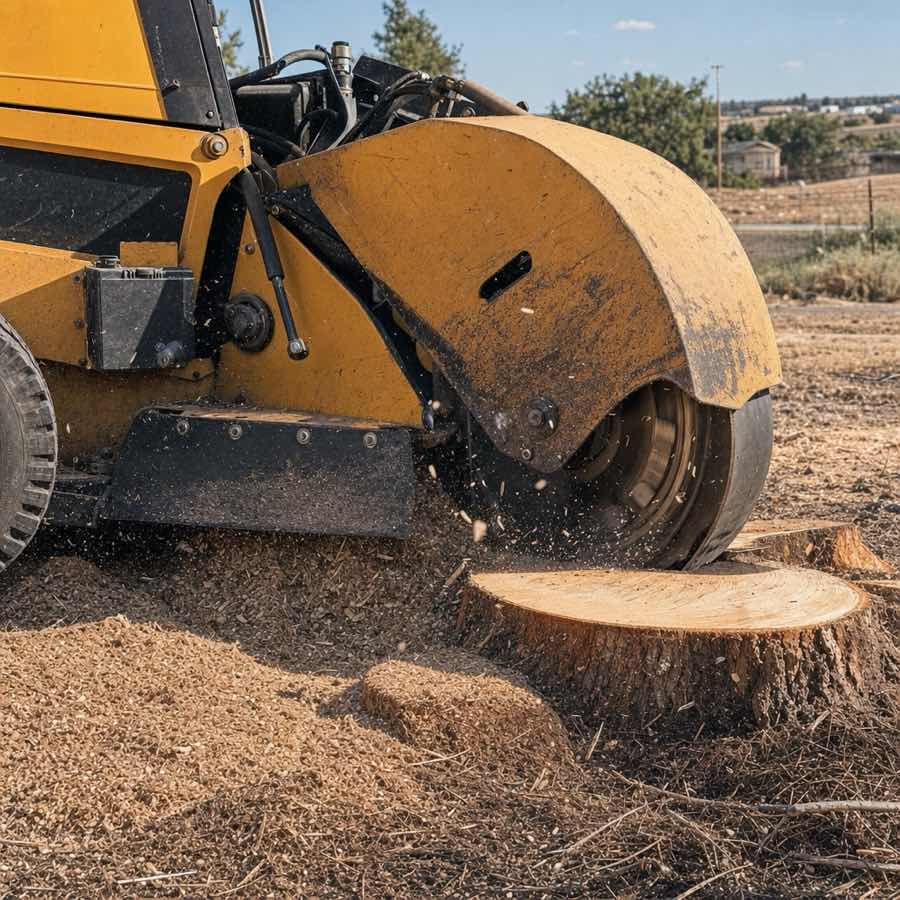
How Stump Grinding Works
A stump grinder is a wheel with carbide teeth that chews the stump down into wood chips, working across the top and sides until the stump is gone below the surface. For most yard stumps this takes twenty minutes to an hour; bigger ponderosa stumps with wide root flares take longer. Grinding usually goes wider than the visible stump, since surface roots often run further out than people expect, and leaving root humps behind defeats the point.
How Deep Grinding Goes
Standard grinding depth is 6 to 12 inches below grade, deep enough to plant grass over or set a shallow paver path without hitting wood. If you're planning to build on the spot, run a fence line through it, or you just want it deeper for peace of mind, say so in the request. Deeper grinding takes more time on a big stump and changes the price accordingly. This site does not set that price.
Chips, Backfill, and Cleanup
Most jobs use the ground material to backfill the hole, topped with a bit of soil so the spot settles level instead of sinking into a dip. If you'd rather have the chips hauled off completely, or want extra piled up for mulch somewhere else on the property, say so in the request. It is a short note that saves a second trip. This site does not haul the chips.
Replanting After Grinding
You can plant a new tree or shrub where a stump used to be, but it's worth letting the ground settle for a season first, especially if you're replanting the same species. Leftover root fragments and soil conditions specific to that tree can slow a new planting of the same kind; a different species usually has an easier time. If you have a specific planting plan, mention it in the request so a contractor can talk through timing.
What Affects the Cost
Diameter is the biggest factor, a grinder works through a wide stump for longer than a narrow one. Root flare matters too: some species spread wide and shallow, which means more grinding area even on a modest-diameter trunk. Multiple stumps on one visit generally cost less per stump than a single call-out, since the machine only has to be trailered in once. And access changes everything, a stump the grinder can drive straight up to costs less than one behind a gate the machine has to be walked through.
Access Constraints
Stump grinders are heavy, tracked or wheeled machines, and getting one to a backyard stump sometimes means threading a gate, crossing a septic field the operator needs to avoid, or working in a tight side yard with inches to spare on either side. Gate widths and obstacles belong in the request so there is no surprise when a machine shows up. If access is genuinely too tight for the equipment, a contractor should say so before trying and tearing up the yard.
Contractors often keep more than one size of grinder for this reason. A compact, self-propelled unit fits through a standard gate and works fine on a lawn without leaving ruts, while a larger tow-behind machine handles big ponderosa stumps faster when there's a clear driveway or open yard to bring it through. Fence widths, slopes, and anything the machine has to cross belong in the request so the contractor can bring the right one. This site does not own the equipment.
Frequently Asked Questions
How deep do you grind a stump?
+
Standard grinding goes 6 to 12 inches below grade, which is deep enough to plant grass over or set a shallow paver path without hitting wood. If you're planning to build on the spot or need it deeper for a specific reason, say so in the request, since deeper grinding takes more time and changes the price. This site does not set that price.
Can you grind a stump right next to my house or septic system?
+
Usually, yes, with care. A contractor checks for underground lines and septic infrastructure before grinding near a structure, and can grind close to a foundation with the right size machine and a slower approach. If there is a septic tank, drain field, or line they are not certain about, they should confirm its location before starting. This site does not do the grinding.
What do you do with the wood chips?
+
Most jobs use the ground material to backfill the hole left by grinding, topped off with soil so the spot sits level. If you'd rather have the chips hauled away entirely, or want extra chips left for mulch elsewhere on the property, say so in the request so the contractor can plan for it. This site does not haul chips or set the price.
Can I plant a new tree where the old stump was?
+
You can, though it's worth waiting a season for the ground material to settle and for any leftover root fragments to start breaking down, rather than planting immediately into fresh grindings. For a different species than what was there before, that waiting period matters less; for replanting the same species, give it more time due to soil conditions specific to that tree.
Do you grind multiple stumps at a discount?
+
Generally, yes. Moving a grinder onto a property has a setup cost that's the same whether one stump or six gets ground, so multiple stumps on the same visit usually cost less per stump than a single visit. Tell the contractor how many you have and roughly where they are so they can price it as one job. This site does not set that price. Grinding often follows a tree removal on the same visit.
Get a Free Stump Grinding Estimate
Say how many stumps and roughly where. A local provider may contact you with a quote. This site does not price the job.